


eReader-eBooks,Webnovels&More
eReader LTD
I approached eReader-eBooks,Webnovels&More as an entertainment app for readers who like discovering long-form fiction on a phone. Its focus is ongoing novels and web fiction rather than a general-purpose reading library, so the experience feels more like following a stream of serialized stories than managing a carefully curated personal bookshelf. That distinction matters: I would recommend it to someone who enjoys returning to unfinished stories, but I would not automatically choose it for a reader looking for a polished replacement for a traditional ebook store.
The app is free to install, which makes trying it fairly easy. It comes from eReader LTD and has built a respectable audience, with over one hundred thousand installs and a 4.3 average from around four thousand eight hundred ratings. Those figures suggest that the concept works for many readers, although they do not tell me whether every title or reading experience will suit a particular person. I found it more useful to judge it by how clearly it lets me browse, read, and decide when to continue spending time with a story.
How the reading experience earns trust
My first impression is that this is an app built around volume and continuity. The store summary describes massive popular novels that are ongoing, and that positioning comes through in the way I think about using it: I am not opening it only to read a finished classic or a book I already own. I am opening it to find something currently unfolding, sample the writing, and decide whether I want to keep following it.
That model can be enjoyable when I want a regular reading habit. A short session while waiting for an appointment can become a few chapters, and an unfinished novel gives me a reason to return. At the same time, ongoing fiction creates a commitment that a completed ebook does not. I may become interested in a story without knowing how long it will remain active or how satisfying its eventual direction will be. For me, that makes the app best suited to readers who accept uncertainty as part of the entertainment.
The Teen content rating is another useful part of the trust context. I would still treat it as a broad age guide rather than a guarantee that every story will match my personal comfort level. Serialized fiction can vary widely in tone, themes, and intensity, so I would check a title’s description and early chapters before handing the app to a younger reader. Adults who prefer clearly filtered, tightly edited collections may find the range less predictable than in a conventional bookstore app.
Related News

Why WhatsApp Messenger Still Makes Everyday Communication Feel Easy

Jurassic World: The Game Is the Better Dino Tycoon for Strategic Players

Threads in Real Life: Who Should Join, Lurk, or Leave

How SHEIN Turned Shopping Into an Endless Content Feed

How to Make Fortnite Feel Smarter on Mobile

Should You Switch to Microsoft Outlook on Mobile?
The developer identity is visible as eReader LTD, which gives the app a clear publisher rather than leaving the product completely anonymous. That is a modest but important starting point when I am deciding whether to create an account or spend time inside a reading platform. Still, a recognizable developer name does not replace my own caution. I would look at the screens shown during sign-in, payment, and reading before accepting anything I do not need.
What I would check before settling in
Because the app is centered on continuing fiction, I would spend my first session testing the basic path instead of immediately building a large reading list. I would open a few different titles, read enough to compare their presentation, and notice whether the app makes the next chapter obvious. This small test tells me more than a quick glance at the catalog because it exposes how much effort is required to move from discovery to actual reading.
I would also pay attention to the difference between free access and any point at which the app asks for a purchase. The app itself is free, while its in-app purchases range from under one dollar to nearly one hundred dollars per item. That is a very broad range, so I would never assume that “free” means every part of every reading path is free. Before confirming a transaction, I would identify exactly what it unlocks, whether it applies to one story or a wider area, and whether the purchase is necessary to continue immediately.
Gallery
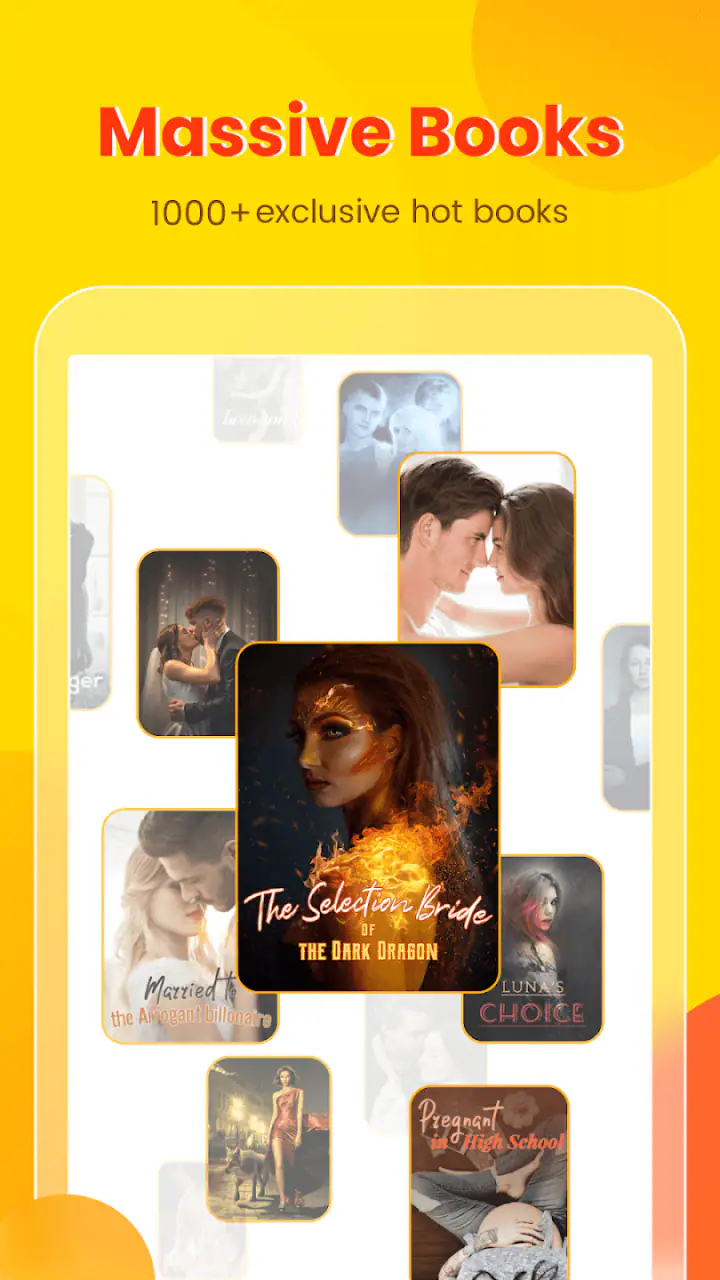
This is one of the most practical habits I can recommend: treat the first few chapters as a trial period. If the writing, translation, pacing, or chapter structure does not work for me, I stop before investing money or building a reading routine around the title. The app’s entertainment value depends heavily on the individual novel, so the platform should not receive automatic trust simply because one recommendation looks appealing.
The current version is 3.1.4, and the minimum operating system is Android 7.0. That makes the app accessible to a fairly broad range of Android devices, including phones that are not new. I would still keep the operating system and app updated when possible, because reading apps often depend on stable account, catalog, and purchase behavior. If I were using an older phone with limited storage or battery life, I would monitor how comfortably long reading sessions fit into my device rather than assuming compatibility means an identical experience on every handset.
Account choices and visible control
Account control is especially important in an app where reading history, saved titles, and purchases may become connected to a profile. My approach would be simple: use the least information needed to start, read the sign-in prompts carefully, and avoid granting access that does not clearly support the reading experience. I would not create an account merely because a prompt appears before I have decided that the catalog is worthwhile.
I would also separate two decisions that are easy to blur together. Saving a title for later is a convenience choice; authorizing a payment is a financial choice. I would be comfortable exploring the catalog first, but I would pause at any purchase screen and verify the amount, the item, and the account selected for billing. This is particularly important here because the upper end of the listed purchase range is substantial compared with a casual reading session.
When I finish using the app, I would review the account area rather than relying only on uninstalling it. Removing an app from a phone is not the same thing as closing an account or checking purchase history. If I no longer wanted to use the service, I would look for the available account controls, remove saved payment options where the platform allows it, and keep a record of any transaction. Those are ordinary precautions, but they are more useful than guessing what an app does behind the scenes.
I would apply the same care to notifications. Ongoing novels can encourage frequent returns, which is useful when I want a reading routine but distracting when my phone is already busy. If notification controls are offered, I would keep only the alerts I actually value, such as meaningful reading updates, and silence anything that turns browsing into pressure. A good entertainment app should fit my schedule rather than dictate it.
Data-sensitive moments while reading
The most sensitive moments are not necessarily the pages themselves. They are the points where I search, save, sign in, review my history, or pay for access. My searches can reveal genres, themes, and interests that I may prefer to keep private. For that reason, I would avoid treating the search field as a place for personal notes or sensitive information. I would use short title or genre terms and remember that convenience features can create a record of what I am looking for.
Reading history can also become revealing over time. A long list of saved or recently opened novels may show more about my habits than a single search. If I share a phone or use a device that other people can access, I would check whether the app offers a way to control visible history, saved items, or account access. I would not assume that a private reading preference stays private simply because I am reading alone.
Payments deserve the strongest pause. Since individual in-app purchases may be as low as ninety-nine cents or as high as ninety-nine dollars and ninety-nine cents, I would confirm every screen before tapping the final button. I would use the operating system’s purchase authentication where available and avoid saving payment details unless the convenience is worth the added exposure. For a younger user covered by the Teen rating, I would make sure the device owner controls purchases rather than leaving that decision to an unattended phone.
I also prefer to evaluate permissions by function instead of by assumption. If the app asks for access to something on my device, I would read the wording and ask whether that access is genuinely needed for reading, account management, or purchases. I would deny requests that do not have a clear connection to those tasks, then see whether the core reading experience still works. This approach avoids both extremes: blindly accepting everything and claiming that an app is unsafe without evidence.
The same rule applies to external sign-in or sharing. If a login option connects the app with another service, I would inspect the account chooser and the permissions shown before continuing. I would prefer a route that gives me clear control over what is shared. If the app makes a feature difficult to use without a broader connection, that would affect my trust judgment even if the reading catalog itself is appealing.
A realistic everyday way to use it
Imagine I have a twenty-minute train ride and want fiction that can be read in small pieces. I would open the app, choose one ongoing novel that matches my mood, and read a manageable section rather than jumping between many titles. Before leaving home, I would check that I can reach the content I want without relying on a weak signal, because a serialized reading habit becomes frustrating if every short session starts with troubleshooting. I would then close the app and review what remains visible in my recent list when I arrive.
That workflow highlights both the strength and the limitation. The strength is continuity: an ongoing story can make a fragmented commute feel like part of a larger reading experience. The limitation is dependence on the app’s own catalog and access rules. With a standard ebook reader, I might buy or borrow a finished book and know exactly what I have. Here, I am choosing a living stream of content, and my satisfaction depends on how well the platform manages discovery and continuation.
A second useful workflow is to keep one “test” title and one dependable title rather than spending immediately on several stories. I would use the test title to explore a new genre and the dependable title for relaxed reading. This reduces the chance of paying for a story that loses my interest and helps me judge whether the app is valuable as a long-term habit or only as a source of occasional discoveries.
Where it differs from ordinary ebook alternatives
Compared with a conventional ebook store, this app’s appeal is its emphasis on ongoing novels and web fiction. A typical bookstore is stronger when I already know the author, want a finished work, need a broad publishing catalog, or care about owning a clearly defined book. I would choose that kind of service for planned purchases and dependable access to completed reading.
Compared with a general reading subscription, this app feels more focused on serialized discovery than on presenting a fixed library whose value I can measure immediately. A subscription can be easier to understand when its catalog and access terms are clear. Here, I would spend more time testing individual stories and watching for the point at which free reading changes into a purchase. That extra attention is the trade-off for the chance to find a novel that updates or continues in a way a finished ebook cannot.
It also differs from social reading platforms. I would not choose it primarily for discussion, reading groups, or a strong community layer unless those elements are clearly presented during use. My reason for opening it is the fiction itself. Readers who want comments, author interaction, or detailed social recommendations may prefer a service designed around those activities rather than one whose central promise is access to ongoing novels.
For privacy-conscious readers, the comparison is equally practical. A local ebook file can minimize the amount of reading behavior connected to an online platform, while an ongoing-fiction app naturally encourages browsing, saving, and returning. That does not prove a problem, but it does mean I would make more deliberate choices about accounts, permissions, history, and purchases here than I would with a simple offline reader.
Who should use it, and who should skip it
I think the app is a good match for readers who enjoy discovering popular web fiction, do not mind unfinished stories, and like returning to the same narrative over time. It is also worth trying for someone who wants a free starting point before deciding whether a particular title deserves money or regular attention. The Teen rating makes it more appropriate for a broad older audience than an app aimed only at children, although I would still inspect individual titles.
I would be more cautious if I wanted a quiet, distraction-free reader with a collection I fully control. Someone who dislikes serialized pacing, uncertain endings, frequent browsing, or purchase prompts may become frustrated. I would also skip it as my main reading tool if I require a guaranteed offline library, a highly predictable one-time pricing model, or a catalog built around completed books from known publishers.
Readers who share devices should think carefully before signing in. If another person can open the phone, saved titles and recent reading may be visible, and purchase controls become more important. I would use device security, review account settings, and avoid leaving an active payment path available to someone who should not use it.
My practical recommendation is to begin with exploration rather than commitment. Try several titles, read enough to judge the writing and presentation, and watch for the exact point where access changes. Keep notifications restrained, review permissions as they appear, and authenticate purchases. Those steps do not take much time, but they give me far better control over the experience than simply tapping through every prompt.
My cautious verdict after using it
I see eReader-eBooks,Webnovels&More as a specialized entertainment app rather than a universal ebook replacement. Its strongest idea is the focus on ongoing novels: for the right reader, that creates a reason to return and makes short reading sessions feel connected. Its weaker side is the uncertainty that comes with serialized content and a wide range of possible in-app purchase amounts. I need to be more attentive here than I would be when buying one clearly priced finished ebook.
The app’s free entry point, broad device support from Android 7.0 onward, and solid 4.3 average make it reasonable to test. Its Teen age guidance and visible developer name, eReader LTD, provide useful context, but neither should replace careful judgment about titles, permissions, account access, or billing. I would evaluate trust through the choices shown on my own screen: what I am asked to authorize, what I can decline, and how clearly the app explains a purchase before I confirm it.
My final advice is simple: use it as a discovery tool first. If you enjoy ongoing web novels and are willing to manage your reading history, notifications, and spending deliberately, it can become a pleasant part of an everyday routine. If you want finished books, predictable ownership, or minimal online account involvement, a traditional ebook reader will probably serve you better. The best reason to try it is curiosity, not commitment; let the stories earn your time before you give the platform your money or more personal access than you need.
FAQs for eReader-eBooks,Webnovels&More
What is eReader-eBooks, Webnovels & More?
eReader-eBooks, Webnovels & More is a digital reading app designed for people who enjoy ebooks, serialized web novels, and other written content in one place. After exploring the app, its main appeal is the convenient reading experience, organized library, and access to different genres. It is suitable for casual readers as well as users who regularly follow ongoing stories.
Can I read books and webnovels offline?
Offline reading may be available for supported titles, but it generally depends on downloading the content to your device first and on the permissions set by the publisher. Before traveling or going somewhere without internet access, open the title while connected, look for a download or offline option, and confirm that it appears in your library. Not every book or chapter necessarily supports offline access.
Is eReader-eBooks, Webnovels & More free to use?
The app can usually be downloaded without an upfront charge, although the reading catalog may include a mixture of free content, premium books, locked chapters, advertisements, or optional in-app purchases. The exact pricing and availability can vary by title and region. It is worth checking the book description and purchase screen carefully before spending credits or subscribing to any additional service.
What reading and customization features does the app offer?
The reading experience typically includes useful controls such as adjustable text size, font or display settings, page navigation, bookmarks, and library organization. Depending on the specific version and title, additional options may include themes for nighttime reading, progress synchronization, search, and personalized recommendations. These tools make longer reading sessions more comfortable, although the available features can differ between ebooks and webnovels.
Is the app safe, and what should I check before downloading it?
As with any reading platform, download eReader-eBooks, Webnovels & More through the official Google Play Store or Apple App Store rather than from unknown websites. Review the developer name, recent user ratings, update history, requested permissions, privacy policy, and subscription terms. Also check whether your device meets the operating requirements and whether the app is available in your country before installing it.
Pros
- Supports multiple eBook formats for flexible reading.
- Large catalog of novels
- web fiction
- and serialized stories.
- Customizable fonts
- themes
- and reading layouts.
- Offline access lets you read downloaded books without internet.
- Progress syncing helps continue reading across supported devices.
Cons
- Some titles may require separate purchases or premium credits.
- The free catalog can include frequent advertisements or locked chapters.
- Content quality and editing may vary between independent authors.
- Account registration may be needed to sync progress and access features.
- Availability of books and novels can differ by country or region.


